Best Lithium Batteries for e-bikes in 2026: What to Know Before You Buy
The best lithium battery e-bike pack in 2026, including voltage, capacity, BMS, certification and real riding needs.
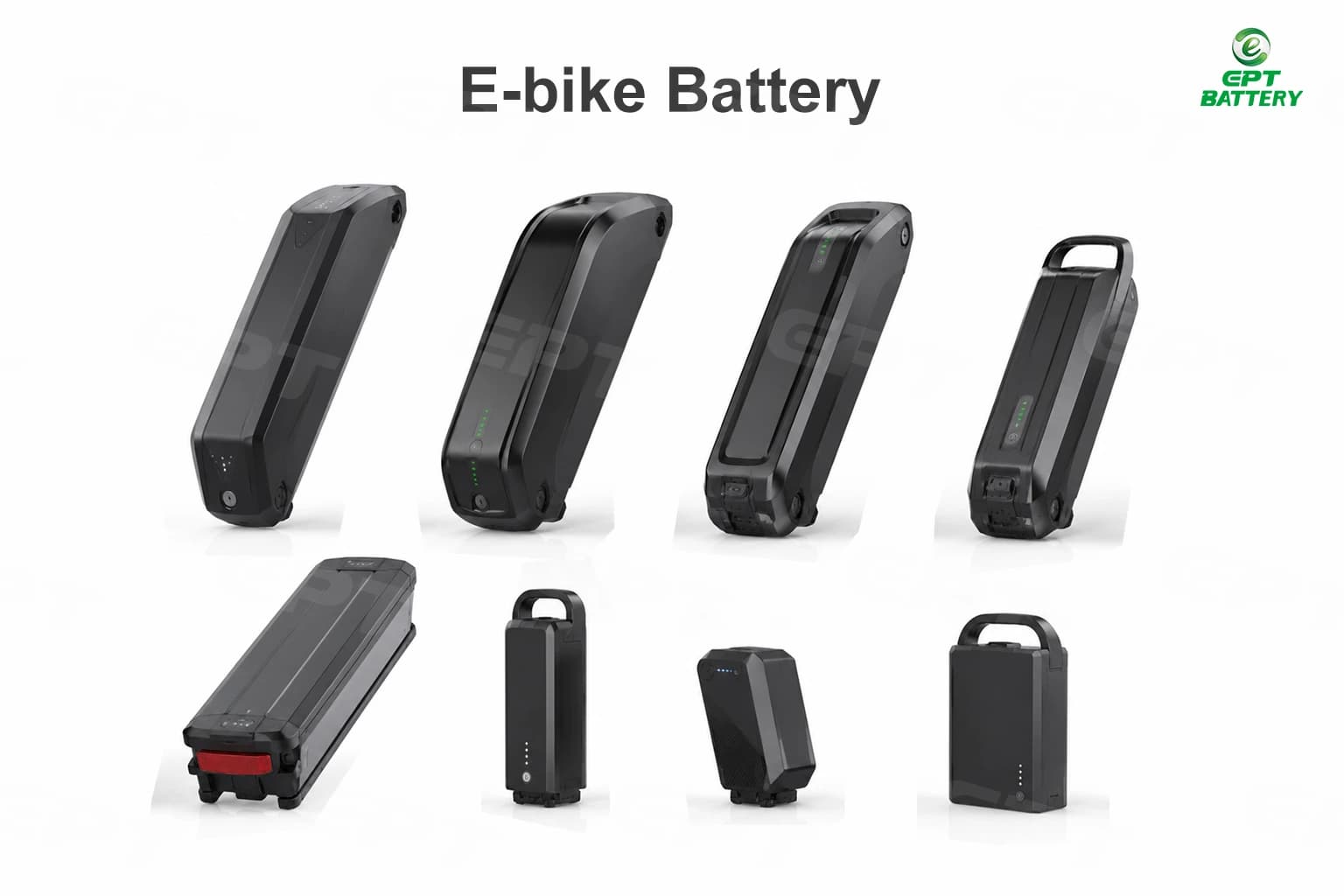
A lithium battery e-bike pack is not just a range number on a product page. It determines how far the bike can travel, how safely it charges, how much current the motor can draw and how confident a buyer feels after months of use.
In 2026, e-bike battery buyers are asking sharper questions. Is the pack certified? Does the BMS match the motor load? Is the housing built for vibration and weather exposure? Can the supplier support consistent cell quality? Check before choosing an e-bike lithium battery for consumer, fleet or OEM applications.
Why Lithium Battery e-bike Selection Matters in 2026
E-bike batteries face higher scrutiny because safety, warranty and ride quality are all tied to the pack.
An e-bike battery works harder than many small device batteries. It powers motor starts, hill climbs, acceleration and long discharge cycles. The battery is typically mounted close to the rider and is often stored indoors along with the charger.
That is why battery sourcing should not focus only on amp-hours. A strong e-bike pack should match the voltage platform, controller current, enclosure, charger, certification target and expected ride pattern.
For safety guidance, the U.S. Consumer Product Safety Commission highlights fire risks linked to micromobility products and encourages consumers to use certified products and proper chargers.
Voltage and Capacity: What the Numbers Mean
Voltage should match the motor and controller system.
Common e-bike packs use platforms such as 36V or 48V, but the right choice depends on the vehicle design. A 36V pack can fit urban commuting and light electric two-wheelers. Higher voltage systems may support better power performance, but they also affect charger, controller and safety design.
Capacity, often shown in amp-hours, influences range. More capacity can extend riding distance, but it also adds size, weight and cost. Range claims should always be tested under real conditions, because rider weight, terrain, speed, tire pressure and temperature change results.
EPT's 36V 7.8Ah e-bike 18650 lithium battery is one example of a 36V pack for e-bikes and scooters. The product page lists 36V nominal voltage, 7.8Ah capacity, 42V full charge cutoff voltage and 15A maximum discharge current.
BMS, Protection and Certification
A reliable lithium battery e-bike pack needs a BMS that matches the motor load and charger.
The BMS should help protect against overcharge, overdischarge, overcurrent during discharge and short-circuit conditions. It should also support the pack's current requirements without nuisance shutdowns during normal acceleration.
Certification is another buyer concern in 2026. The recommended EPT e-bike battery page lists UL 2271 certification and CE. For OEMs and distributors, that matters because micromobility fire safety has become a serious market-entry and liability issue.
Still, certification should be reviewed in context. Ask for current documents, test scope and product match. Do not assume one certificate applies to every pack variation.
Cell Quality and Pack Construction
Cell quality affects range, heat and long-term consistency.
Many e-bike packs use cylindrical lithium cells, including 18650 formats. Cell matching matters because a weak cell group can reduce usable capacity or trigger protection earlier than expected.
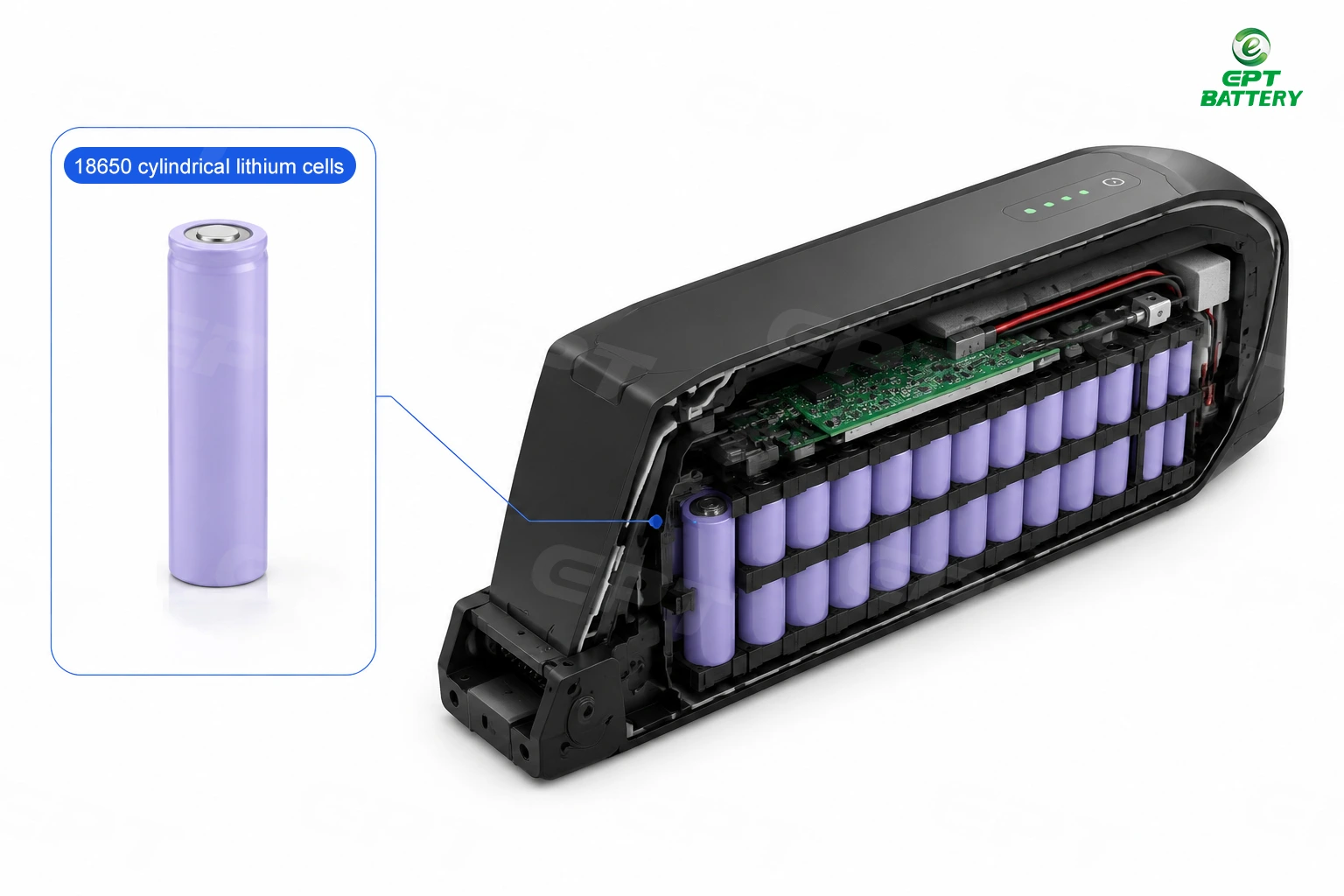
Pack construction also matters. Vibration, moisture, connector stress and heat can all affect service life. The battery housing should protect the cells and wiring while still fitting the vehicle structure.
For teams comparing cylindrical-cell designs, EPT's 18650 lithium battery category is a natural internal reference. It connects e-bike pack design with the cell format behind many compact lithium battery systems.
Questions to Ask Before Buying in 2026
Before you buy an e-bike battery, ask the supplier for more than a product photo and capacity label. Request the pack drawing, charger requirements, BMS protection summary, certification documents and operating temperature range.
For fleet or OEM buyers, also ask how the pack performs after vibration, repeated charging and high-current riding. The most useful supplier answers are specific. They should explain the test condition, not only the best-case result.
If the pack is promoted for urban commuting, compare its claimed range with your actual rider profile. Stop-and-go traffic, hills and cold weather can all reduce range. A good buying decision starts with a realistic duty cycle.
Keep these answers in the sourcing file so engineering, purchasing and quality teams review the same evidence.
Frequently Asked Questions
Q1: What is the best lithium battery for an e-bike?
The best pack matches the motor voltage, controller current, range target, charger, housing and certification needs.
Q2: Is 36V enough for an e-bike?
36V can be suitable for many commuter and light electric two-wheeler designs. Heavier or faster vehicles may require higher-voltage battery systems.
Q3: Why does UL 2271 matter?
UL 2271 relates to battery safety for light electric vehicle applications. Buyers should verify certificate scope and product match.
Q4: How should OEMs test an e-bike battery?
Test range, voltage sag, current draw, charging, temperature, vibration, connector reliability and BMS fault behavior.
Choosing a lithium battery e-bike pack in 2026 means looking beyond capacity. Voltage, BMS design, cell quality, housing, certification and supplier support all affect the final ride experience.
If your team is developing an e-bike, scooter or electric assist vehicle, start with the vehicle requirements. Then compare battery packs against those real loads, not only the headline range claim.
Related News
Related Articles
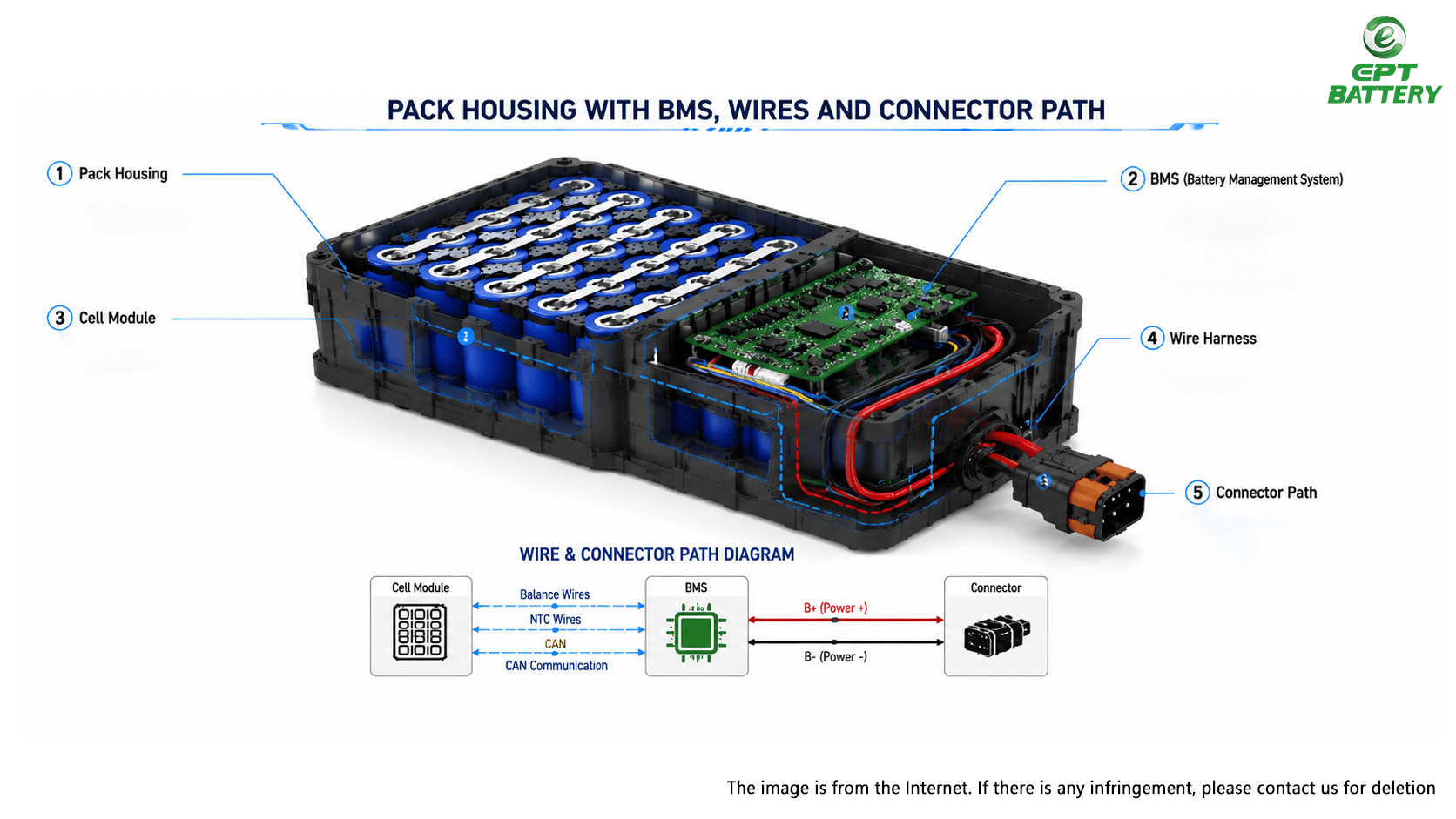
Lithium-Ion Battery Pack Design: Cells, BMS, Housing, and Communication Options
Learn how lithium-ion battery pack design integrates cells, BMS, housing and communication options for OEM electronic products.
Read Full Article
EPT-Battery at Hong Kong Electronics Fair 2026: Battery Solutions for AI Devices and Smart Living
Read Full Article