How to Recycle Lithium Batteries Safely
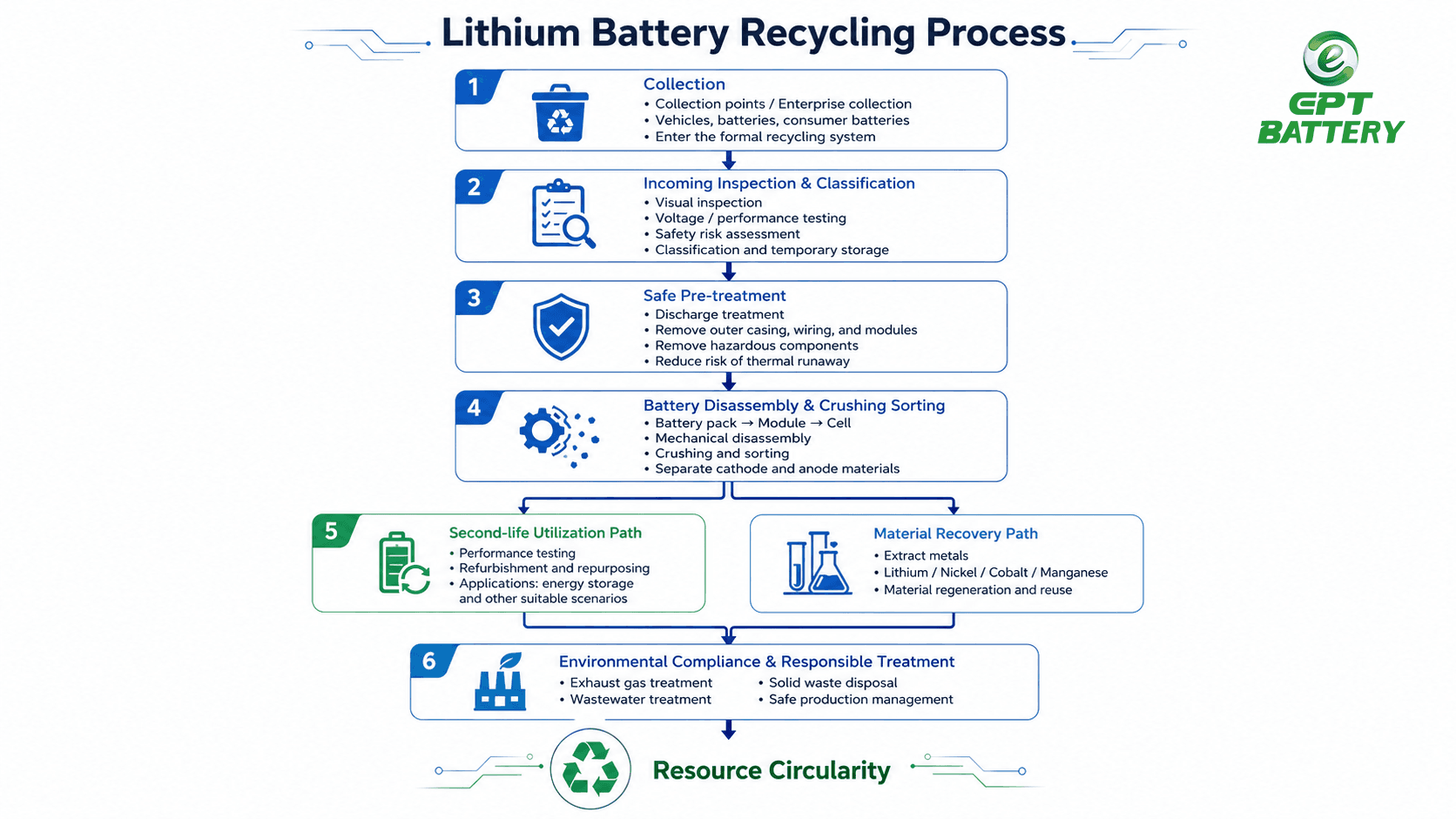
If you need to recycle lithium batteries, the first rule is simple: do not treat them like ordinary trash. Used lithium-ion cells can still hold energy. If the terminals touch metal, the battery is crushed, or the pack is exposed to heat, this can pose a fire risk during storage, transport or waste handling.
For households, recycling may mean taking old batteries to a certified collection point. For OEM brands, service teams and device manufacturers, it means building a repeatable process for sorting, storing and sending used packs to qualified recyclers.
Why Lithium Battery Recycling Needs Extra Care
Lithium batteries need extra care because they can still deliver current after a device stops working.
A pack removed from a scanner, robot, camera, e-bike or medical device may look dead, but it may not be electrically safe. Damaged insulation, exposed terminals or swelling can make handling riskier. Mixed waste bins make the problem worse because batteries can be crushed or shorted by metal objects.
The U.S. EPA advises consumers and businesses to recycle lithium-ion batteries through separate battery collection or recycling programs, not household trash. That advice matters for safety and for material recovery.
How to Prepare Lithium Batteries for Recycling
Preparation should reduce short-circuit and damage risk before the battery leaves your facility.
Start by separating lithium batteries from general waste. Do not place loose cells in a desk drawer, toolbox or mixed scrap container. Keep them in a clean, dry area away from heat and flammable materials.
Before collection:
· Tape exposed terminals with nonconductive tape
· Keep swollen, leaking or damaged batteries separate
· Do not crush, puncture or disassemble cells
· Store batteries in a in a sturdy, non-conductive, and fire-resistant
· Keep packs away from water and high heat
· Follow the recycler's packaging instructions
For device brands, these steps should appear in service manuals and return instructions. A safe recycling process should not depend on one trained employee remembering every rule.
What to Do With Damaged or Swollen Batteries
Damaged lithium batteries need stricter handling than normal used batteries.
If a pack is swollen, hot, leaking, smoking or has a burnt smell, do not ship it through a normal recycling channel unless the recycler accepts damaged batteries and gives packaging instructions. Move it away from people and combustible materials if it is safe to do so.
For business users, create a separate damaged-battery workflow. Label the container clearly. Train staff to stop using damaged packs immediately. If a battery shows active fire, smoke or heat, follow emergency procedures and local fire safety guidance.
This is not only a safety issue. It protects your brand. A return program that ignores damaged battery handling can create risk during warehouse storage or transport.
Design Choices That Make Recycling Easier
Battery recycling is easier when the product is designed for service.
If a battery pack is glued into a device, hidden behind fragile parts or hard to identify, repair teams may damage it during removal. That raises safety risk and increases labor cost.
Product teams can help by planning:
· Clear battery labels
· Service-friendly pack access
· Connector designs that reduce wire damage
· Pack documentation for voltage and chemistry
· End-of-life instructions for customers and repair teams
For compact lithium-powered products, EPT's lithium polymer batteries page is a useful internal reference because pouch-cell designs often require careful housing, connector and protection planning. For cylindrical-cell packs, EPT's cylindrical lithium battery and cell category can help teams think through format and pack structure.
What Not to Do When Recycling Lithium Batteries
Some recycling mistakes are common because batteries look harmless.
Do not throw lithium batteries into household trash. Do not put loose cells in plastic bags with keys, screws or tools. Do not remove protection circuits unless instructed to do so by a trained technician or a recycler.. Do not ship unknown damaged batteries without instructions.
Also avoid storing large volumes of returned packs without a documented process. A small box of used batteries can become a hazard if it sits for months, becomes disorganized and includes damaged units.
If you manage battery returns at scale, ask your recycler what they accept and how they want batteries packaged. Their instructions should guide your internal process.
Documentation That Improves Recycling Compliance
Documentation makes recycling safer because it turns a good intention into a repeatable process. For business users, every returned battery should have a simple record: chemistry, pack type, condition, storage date and handling status.
This record helps teams separate normal used packs from damaged packs. It also helps recyclers understand what they are receiving. If your company manages batteries from many product lines, labels and records reduce the chance that lithium-ion, NiMH and alkaline batteries get mixed together.
For OEMs, the strongest EEAT signal is practical experience. Include return instructions in the user manual, train service teams and keep recycler instructions with your internal quality documents.
[Image placement 3: After compliance documentation section]
Image SEO Title: Recycling Records
Alt Text: Battery return records for safe recycling.