High-Discharge RC Car Battery Packs for Maximum Speed and Runtime
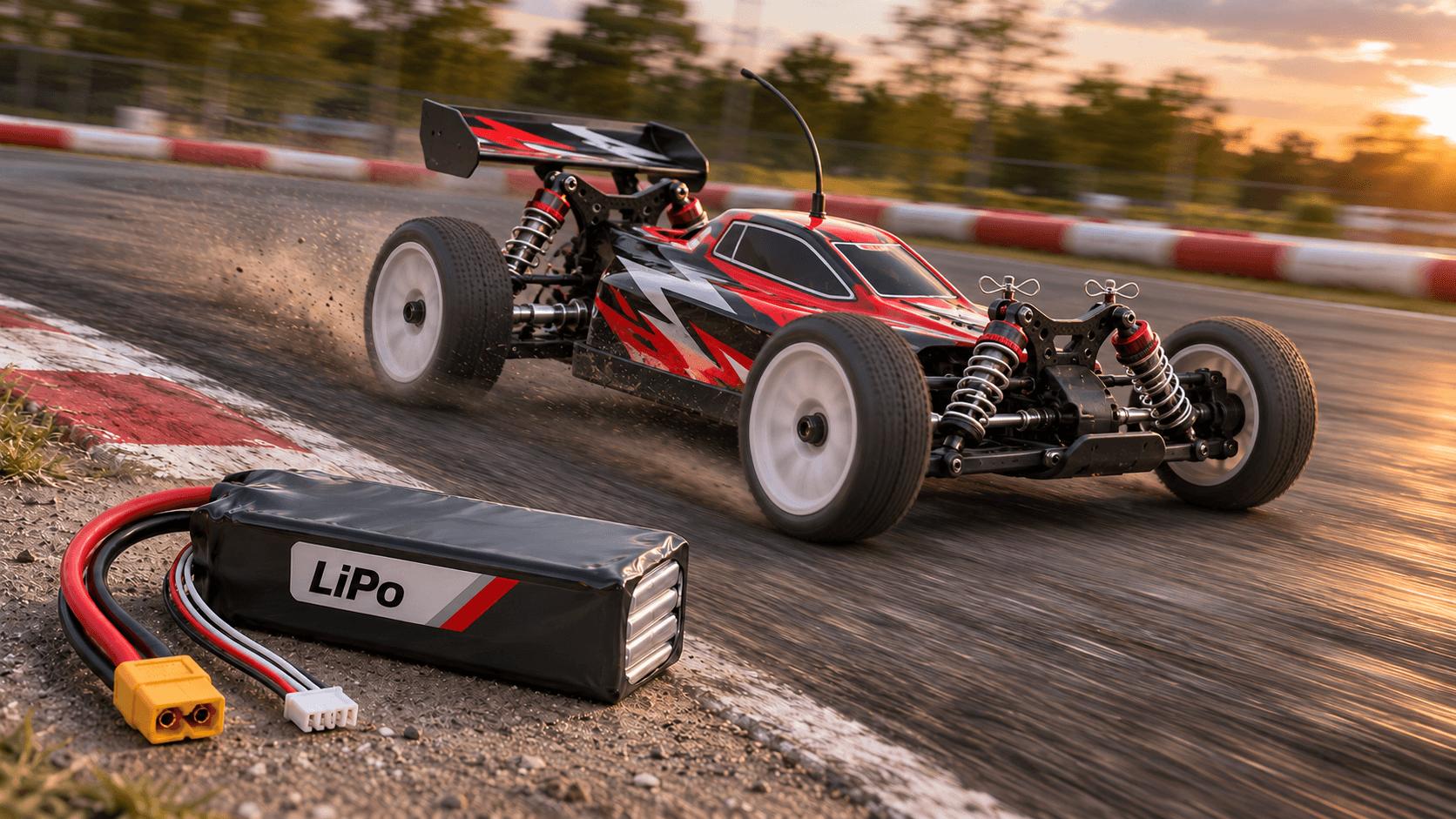
Your rc car battery provides the necessary current for your radio-controlled vehicle.This single component dictates whether you command the straightaways or struggle to finish the heat. Does your current setup provide the punch needed for that final sprint? You redefine your track experience by opting for a power source built for extreme discharge
Understanding RC Car Battery Basics and What It Means for You
An rc car battery defines how your vehicle performs under load. It impacts acceleration, runtime, and consistency.
“RC” means radio control. It refers to batteries built for high discharge and repeated cycling. These batteries support rapid bursts of power.
When you choose a remote controlled car battery, you are making a system-level decision. A mismatch can limit speed or cause instability.
You should always consider how your battery interacts with motor, ESC, and chassis space. Fit and output both matter.
Capacity vs Output: What Is Milliamp Hours and Why It Matters
What is milliamp hours? It measures how much energy your battery stores. It directly affects runtime.
Higher mAh gives longer operation. That sounds ideal, but it also adds weight. Extra weight reduces agility and increases load on the motor.
Discharge rate defines how fast energy flows. This is the “C rating.” It determines how responsive your rc car with battery feels during acceleration.
Use this formula to estimate output:
Amps = Capacity × C-rating
If your system demands high bursts, low C ratings will bottleneck performance. If your setup is casual, extreme output may not add value.
You should match battery output to your actual driving style.
RC Lithium Polymer Batteries vs NiMH: Which One Matches Your Needs
RC lithium polymer batteries and NiMH batteries solve different problems. Your choice depends on how you use your vehicle.
LiPo batteries provide higher energy density. They are lighter and maintain stable voltage. This leads to consistent speed and sharper throttle response.
NiMH batteries focus on simplicity and durability. They require less maintenance and tolerate varied usage conditions.
If you manage a product line or source components, this decision impacts user experience.
EPT 7.2V 700mAh AA NiMH battery delivers stable high-drain output. It works well for 1/10 scale vehicles and toy-grade upgrades. You get reliable performance without complex maintenance requirements.
For many consumer-facing products, ease of use still drives purchasing decisions.
Voltage and Speed: How Remote Control Car LiPo Batteries Affect Performance
Voltage determines how fast your car can go. More voltage increases motor speed.
LiPo batteries use cell counts to define voltage:
2S equals 7.4V
3S equals 11.1V
4S equals 14.8V
Higher voltage increases acceleration and top speed. It also raises system stress. ESC and motor must support the voltage range.
If you exceed limits, you risk overheating or failure.
For controlled upgrades, NiMH still plays a role. EPT 9.6V 800mAh AA NiMH battery offers higher voltage than standard packs. It delivers noticeable speed improvement while maintaining stable chemistry.
This approach suits users who want better performance without moving to LiPo systems.
Ask yourself one question. Do you need maximum speed, or consistent operation?
RC Car Battery Parts and Connector Compatibility You Should Check
Battery performance depends on internal and external components.
Key rc car battery parts include:
· Cells that define capacity and discharge
· Balance leads for voltage consistency
· Protective casing for impact resistance
· Connectors for efficient current flow
Connector types matter more than most users expect.
Common options include:
· XT60 for balanced performance and reliability
· Deans connectors for compact setups
· EC5 for high-current systems
If connectors do not match, you will need adapters. Adapters introduce resistance and potential failure points.
Hardcase battery packs add structural protection. They reduce damage during off-road use or high-impact driving.
If you design or source batteries at scale, standardizing connectors improves reliability across product lines.
Protecting Your RC Car Battery Pack for Long-Term Use
Battery safety directly affects product lifespan and user satisfaction.
For rechargeable lipo battery systems, follow controlled charging practices. Use the 1C rule to prevent stress.
Storage also matters. Keep batteries at 3.8V to 3.85V per cell when idle. This preserves internal chemistry.
Watch for early warning signs:
· Swelling indicates internal failure
· Voltage imbalance reduces efficiency
· Deep discharge shortens lifespan
NiMH batteries simplify maintenance. They handle variable usage without strict controls. Still, you should avoid full depletion cycles when possible.
For OEM applications, adding battery management systems improves consistency and reduces warranty risk.
Choosing the Right Battery for RC in Real-World Applications
Selecting batteries for rc cars is not just about specs. It is about real usage conditions.
Consider how your product operates:
· Is it used daily or occasionally?
· Does it run in high temperatures?
· Are users experienced or beginners?
LiPo batteries fit high-performance systems such as racing vehicles and advanced robotics.
NiMH batteries support consumer electronics, education tools, and entry-level vehicles. They reduce complexity for end users.
EPT provides battery for rc solutions tailored to these needs. You can customize voltage, capacity, and connector types to match your design goals.
This flexibility supports both performance-focused and reliability-driven products.
Final Thoughts: Build Around the Right RC Car Battery Strategy
RC car battery decisions affect more than speed. They shape user experience, durability, and product success.
You need to align battery specs with system demands. Avoid oversizing or underpowering your setup.
LiPo offers performance and efficiency. NiMH provides stability and ease of use. Both serve clear roles in modern applications.
If you are developing or sourcing rc car battery pack solutions, focus on fit, output, and lifecycle.
EPT battery solutions support scalable, application-specific designs. Evaluate your requirements carefully. Then choose a battery strategy that delivers consistent performance in real-world use.
Related News
Related Articles
Maximizing Runtime on Your Battery Vacuum Cleaner for Whole-Home Cleaning
Read Full Article
Headphone Batteries 101: A Deep Dive into the Tech Powering Your Wireless Headset
Read Full Article